
Cloud Ecosystem
AIoT Cloud Ecosystem
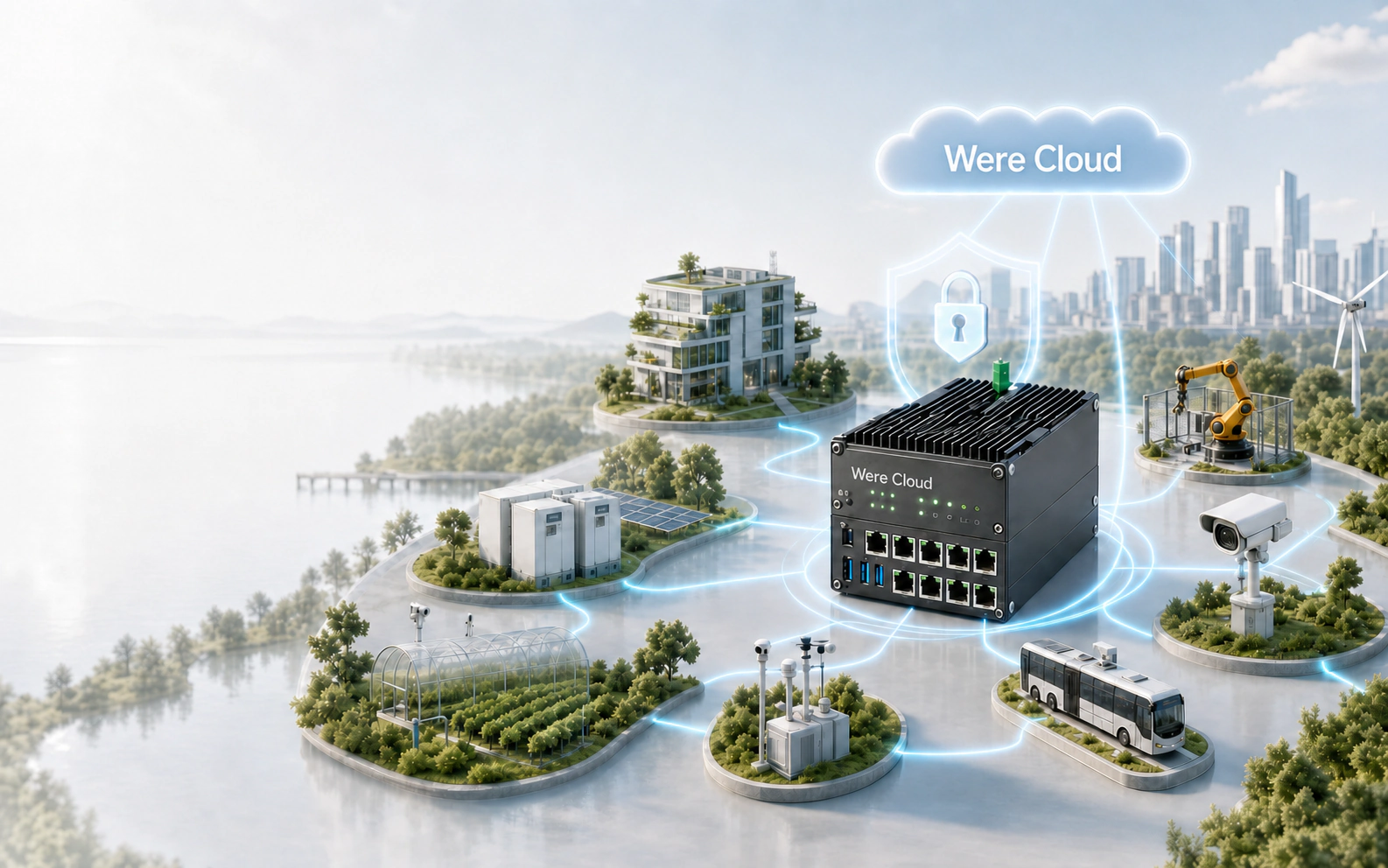
Were Cloud connects devices, edge agents and cloud agents through an MQTT event bus, unified device semantics and trusted execution—taking IoT from connected devices to safely delegated operations.
Agentic IoT and the Event Bus for the Physical World
MQTT is more than a lightweight messaging protocol between devices and the cloud. It can also serve as the real-time event layer through which AI agents observe and act on the physical world.
- Sensing bus: Aggregates device status, telemetry, active sessions and anomalous events to give agents a continuous, real-time view of environmental change.
- Action bus: Converts agent plans into device commands governed by permissions, policies and risk levels.
- Coordination bus: Enables device gateways, edge agents, cloud agents and business agents to collaborate through event-driven workflows.
- AI rules engine: Uses semantic AI to define rules and combines them with granular AIoT metrics so that each command runs against explicit conditions without manual intervention.
The key to practical deployment is not giving a model direct read and write access to topics. A device model and semantic gateway must first interpret topics, payloads, units, capabilities and the consequences of each action, then expose those capabilities as tools that agents can invoke safely.
Four-Layer Trusted Agentic IoT Architecture
- Device and edge layer: Sensors, controllers and on-site gateways handle data collection, real-time control, offline operation and low-level safety interlocks.
- MQTT event layer: Carries status, alerts, commands and execution results, creating an event-driven foundation between the edge and cloud.
- Semantics and permissions layer: Unifies device semantics, identity, topic permissions, action scope, rate limits and risk controls.
- Agent coordination layer: Edge agents handle low-latency tasks, cloud agents perform cross-site analysis and complex reasoning, business agents translate operational goals into strategies, and human supervisors approve critical actions.
Trusted Execution
IoT systems control physical equipment, so an incorrect action can affect production, safety and people. Were Cloud therefore applies progressive authorization to every execution path:
- Start read-only by default, with analysis and recommendations; permit autonomous execution only for validated, low-risk actions.
- Give every agent an independent identity with an explicit device scope, topic permissions and call-rate limits.
- Audit decisions and actions end to end, including context, tool calls, MQTT commands, device feedback and rollback status.
- Keep fail-safe controls and safety interlocks at the edge so the site remains safe during network outages or incorrect model decisions.
From “Connected” to “Delegable”
Traditional IoT connects devices to the cloud, visualizes data and triggers predefined rules. Agentic IoT goes further: it continuously senses the environment, interprets context, creates plans and acts within an authorized scope to achieve business goals. People move from configuring every rule to setting objectives, approving high-risk actions and reviewing outcomes.
- Connected: Device status is remotely visible, while data can be stored and analyzed centrally.
- Understandable: Device capabilities, data units, operating context and risk levels share a unified description.
- Delegable: Agents orchestrate devices toward a goal and perform low-risk actions within defined safety boundaries.
- Accountable: Decision rationale, commands, device feedback, human approvals and rollback results are recorded in full.
WSG Security Gateway
A highly reliable security gateway for industrial sites, smart campuses and critical infrastructure, combining multi-network connectivity, protocol conversion, device identity authentication and edge security policies.
- Multi-network connectivity: Switch flexibly among Ethernet, 4G/5G and Wi-Fi networks.
- Protocol compatibility: Support common industrial and IoT protocols, including MQTT, Modbus, HTTP and QUIC.
- Trusted access: Reduce the risk of unknown devices through device certificates, mutual authentication and zero-trust policies.
- Edge protection: Maintain on-site continuity with local rules, anomaly detection and store-and-forward delivery during outages.
Unified Device Connectivity
Centrally manage devices across networks and regions with standard device models, bulk registration, remote configuration and status monitoring.
Secure Data Isolation
Protect data across collection, transmission, storage and use with tenant isolation, granular authorization, audit trails and lifecycle governance.
Edge Computing
Deploy policies and models to the edge, sending critical data to the cloud only when needed to balance low latency, bandwidth efficiency and high availability.
Application Ecosystem
Open APIs, webhooks and a rules engine help development teams connect business systems quickly. Standard protocols and partner solutions span buildings, energy, agriculture, manufacturing and transport.
Security Operations Center
Bring device risk, anomalous connections, policy status and response progress into one operational view so security teams maintain continuous awareness of their IoT assets.